Possible ADS-B Reflection by Mt. Fuji – Part 1 🗻
Climb Mt. Fuji,
slowly, slowly,
snail.
— Kobayashi Issa 🐌

Mount Fuji, the symbolic mountain of Japan, is visible from the window of my apartment.
My ADS-B receiving antenna is installed indoors near that window.
After improving the receiver and antenna setup, an unexpected reception pattern began to appear.
Observation environment:
Antenna height: approximately 43 m above sea level
Indoor V-shaped dipole antenna
Effective reception range: about 180°
Main antenna direction: 210° (SW)
Mount Fuji lies slightly to the west-southwest
Mount Fuji is a massive stratovolcano rising to 3,776.24 meters above sea level.
Its base extends roughly 37 km north–south and 39 km east–west, forming a nearly symmetrical conical shape.
The mountain is primarily composed of basaltic rock.
While analyzing ADS-B reception patterns from my station, I began to notice an unusual phenomenon: aircraft appearing suddenly in positions that seemed geometrically inconsistent with normal line-of-sight reception.
This observation led to an interesting question:
Could Mount Fuji act as a reflector for 1090 MHz ADS-B signals?
In this article, I will outline the initial observation and the hypothesis behind a possible mountain reflection effect.
The following sections describe the observation that triggered this hypothesis.
Figure 1 Observation geometry 👈️
Figure 2 Polar reception plot
Figure 3 Example aircraft track
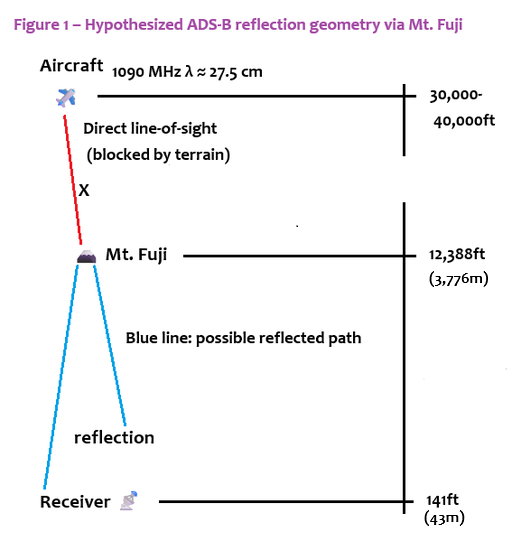
Figure 1 illustrates the hypothesized geometry of the observation.
The direct line-of-sight path from the aircraft to the receiver may be blocked by terrain. However, a reflected path via Mount Fuji could allow the signal to reach the receiver.
Aircraft cruising altitude typically ranges between 30,000 and 40,000 feet, while Mount Fuji rises to 12,388 feet above sea level. The receiving antenna is located approximately 14 feet above ground level.