Possible ADS-B Reflection by Mt. Fuji – Part 3 🗻
Reflection or Diffraction?
In theory, the radio horizon between my receiving antenna and a cruising aircraft is large enough to allow long-distance ADS-B reception. Using a receiver height of 43 m and an aircraft altitude of 12,192 m, the estimated maximum radio line-of-sight distance is approximately:
Estimated combined radio horizon:
4.12 × (√H1 + √H2)
4.12 × (√43 + √12192) ≈ 481.9 km
This suggests that long-range ADS-B reception is not unusual in itself. However, the real situation is more complicated than the ideal radio-horizon model.
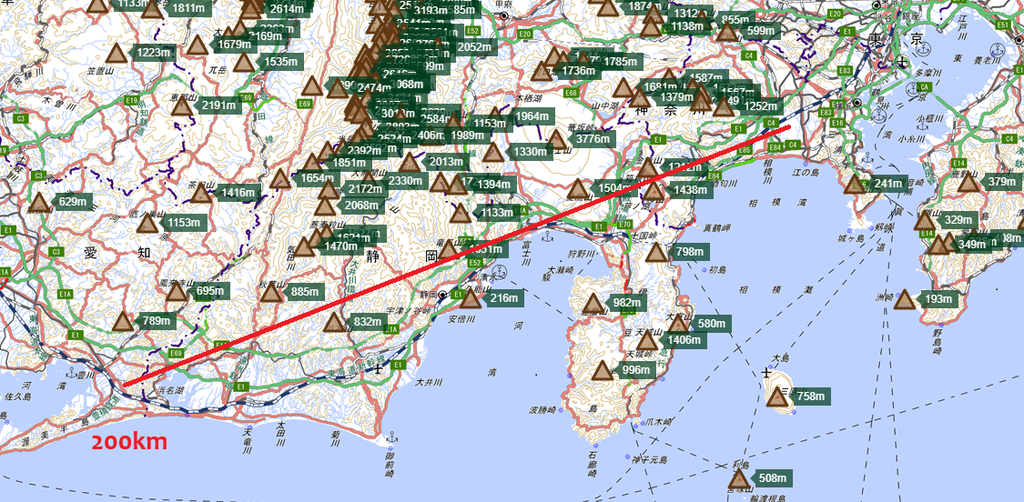
In practice, the area between my location and the west-southwest sector includes Mt. Fuji and surrounding mountain ranges, which can suppress or distort the direct path. The observed aircraft tracks do not always behave like simple line-of-sight reception. Some aircraft appear to drop out once, then reappear farther west.
This raises two possible explanations:
Reflection from a mountain surface, including Mt. Fuji itself
Diffraction, where the signal bends around a ridge or peak into the shadowed region behind the obstacle
In other words, the phenomenon may not be explained by a simple direct path alone. Terrain may play an important role in shaping what is actually received.
At this stage, I cannot determine which mechanism is dominant. However, both mountain reflection and terrain diffraction remain plausible candidates. The theoretical radio horizon is long, but the actual reception path is constrained by terrain.
Figure 1  Observation geometry
Figure 2  Polar reception plot
Figure 3  Example aircraft track 👈️
Tap image to enlarge🐈️
Figure 3a Distance
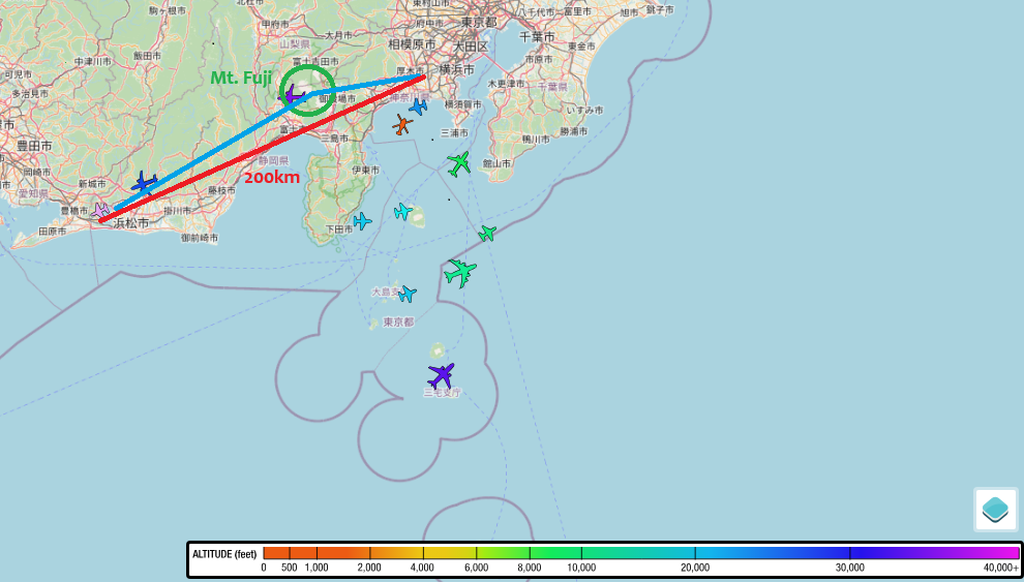
Figure 3b Reception area
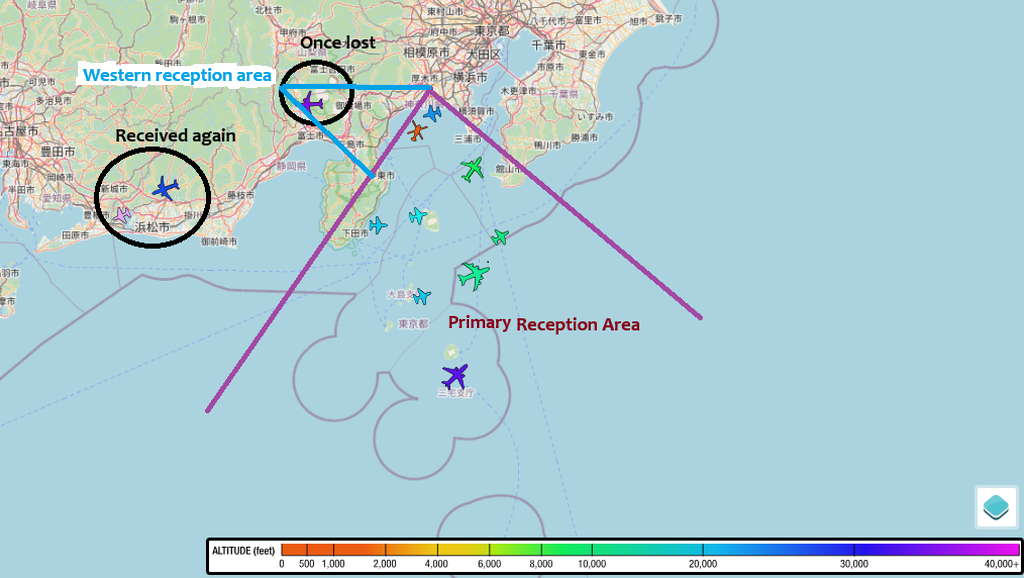
Mountain Locations